State of the Art: What Works, What Doesn’t, and Why
Community Roadmap, What Should We Build Next?
Panelists
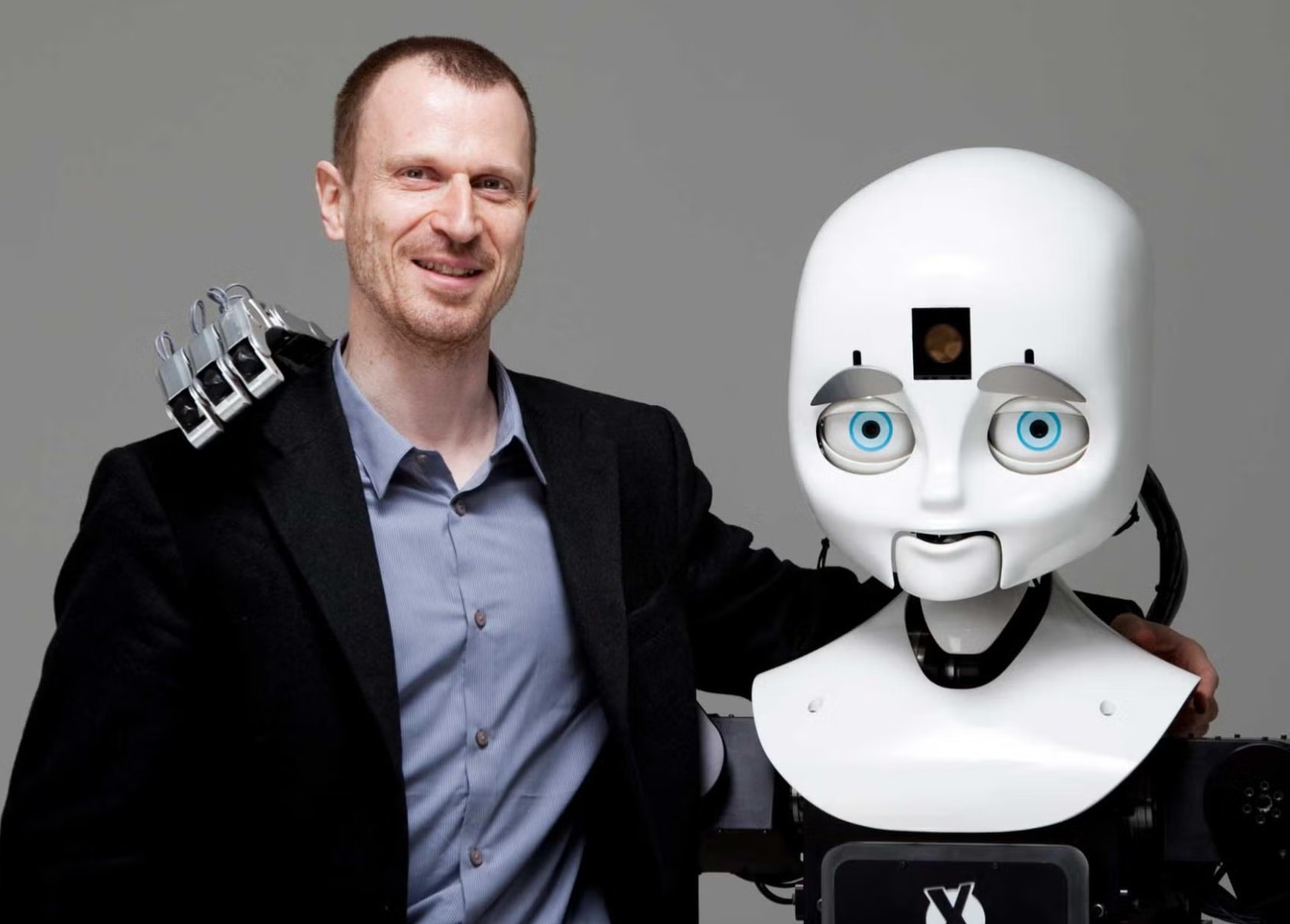
Matthias Scheutz
Tufts University
Human-Robot Interaction Laboratory
Matthias Scheutz directs the Human-Robot Interaction Laboratory at Tufts, where he built DIARC, a cognitive robotic architecture that integrates perception, action, reasoning, affect and real-time spoken dialogue on physical robots. It is one of the few architectures actually fielded for live interaction with people rather than studied in simulation. His work centres on robots that can be taught new tasks and objects through natural language in open worlds, and on norm-conforming behaviour: robots that reason about whether an instruction should be followed, decline when it should not, and explain the reasoning. Most recently he has been developing neurosymbolic vision-language-action models, arguing that teammate-grade robots need provable guarantees at critical decision points rather than purely probabilistic ones.
Christian Lebiere
Carnegie Mellon University
Department of Psychology
Christian Lebiere is, with John R. Anderson, the principal developer of the ACT-R cognitive architecture, the most widely used computational theory of how human cognition is structured. His route to it was itself neurosymbolic. Before ACT-R he co-developed the Cascade-Correlation neural network learning architecture, and his career since has been spent on how symbolic structure and subsymbolic learning fit together in one working system. He applies cognitive architectures to dynamic decision making, human-AI teaming, trust in automation, explainable AI and machine theory of mind, and is a leading contributor to the Common Model of Cognition, the community effort to consolidate fifty years of cognitive architecture research into a shared specification, recently extended to cover metacognition.
Ramviyas Parasuraman
University of Georgia
Heterogeneous Robotics Lab (HeRoLab)
Ram Parasuraman leads HeRoLab, which builds heterogeneous multi-human, multi-robot teams that stay coordinated under real-world conditions. His distinctive emphasis is the communication layer most multi-robot research assumes away: wireless-aware motion planning, signal-based relative localisation, and coordination that degrades gracefully in GPS-denied and bandwidth-starved environments. Much of it is released as open hardware and software, including the HeRoSwarm swarm platform and communication-efficient exploration algorithms. The lab also works on distilling learned policies into interpretable behaviour trees and on human-safety models for robots operating in crowded spaces, with applications from disaster response to precision agriculture.
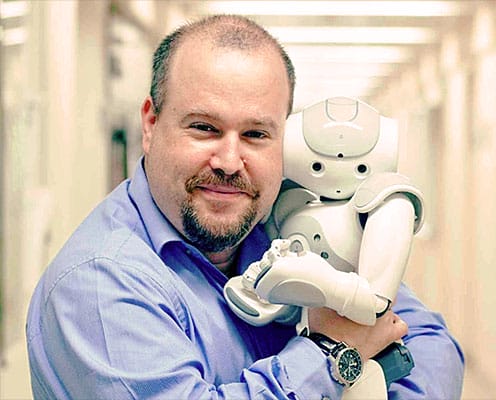
Gal A. Kaminka
Bar-Ilan University
Department of Computer Science, MAVERICK Group
Gal Kaminka is a Professor of Computer Science at Bar-Ilan University, where he leads the MAVERICK research group on artificial social intelligence in autonomous robots and agents: what it takes for machines to act as members of a team rather than as individuals who happen to share a space. After a PhD at the University of Southern California and postdoctoral work at Carnegie Mellon University, he built a research program spanning multi-robot systems and swarms, behaviour and plan recognition, and the rarely studied problem of a single human operating a whole team of robots, extending more recently to molecular robotics for medicine and LLM-based agentic systems. He has authored over 200 publications and holds seven patents, and co-founded BladeRanger, which automated solar-panel cleaning with robots. A Fellow of AAAI and EurAI and a former Radcliffe Fellow at Harvard, he received Israel's Landau Prize for robotics and has served as program co-chair of AAMAS and ECAI and on the board of IFAAMAS.
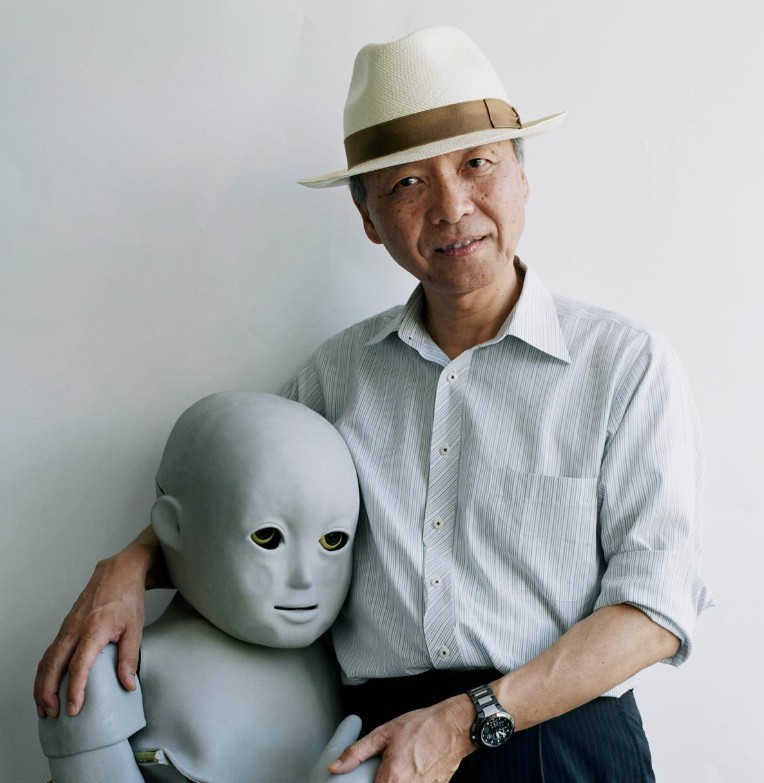
Minoru Asada
International Professional University of Technology in Osaka
Symbiotic Intelligent Systems Research Center, The University of Osaka
Minoru Asada founded cognitive developmental robotics, the constructive approach that builds robots in order to understand how human cognition develops. It treats physical embodiment and social interaction as the two sources from which cognition emerges, rather than as an interface layered on top of it. Through the JST ERATO Asada Synergistic Intelligence Project he produced CB2, a soft-skinned child robot with some 200 tactile sensors for studying infant-like motor and social learning, and Affetto, a child android capable of finely graded facial expression. His more recent work asks what artificial pain and artificial empathy would mean for self-other distinction, moral judgment and machine consciousness, questions that sit directly on this workshop's fault line between capability and teammate-hood. He is also a co-founder of RoboCup and served as President of its International Federation.
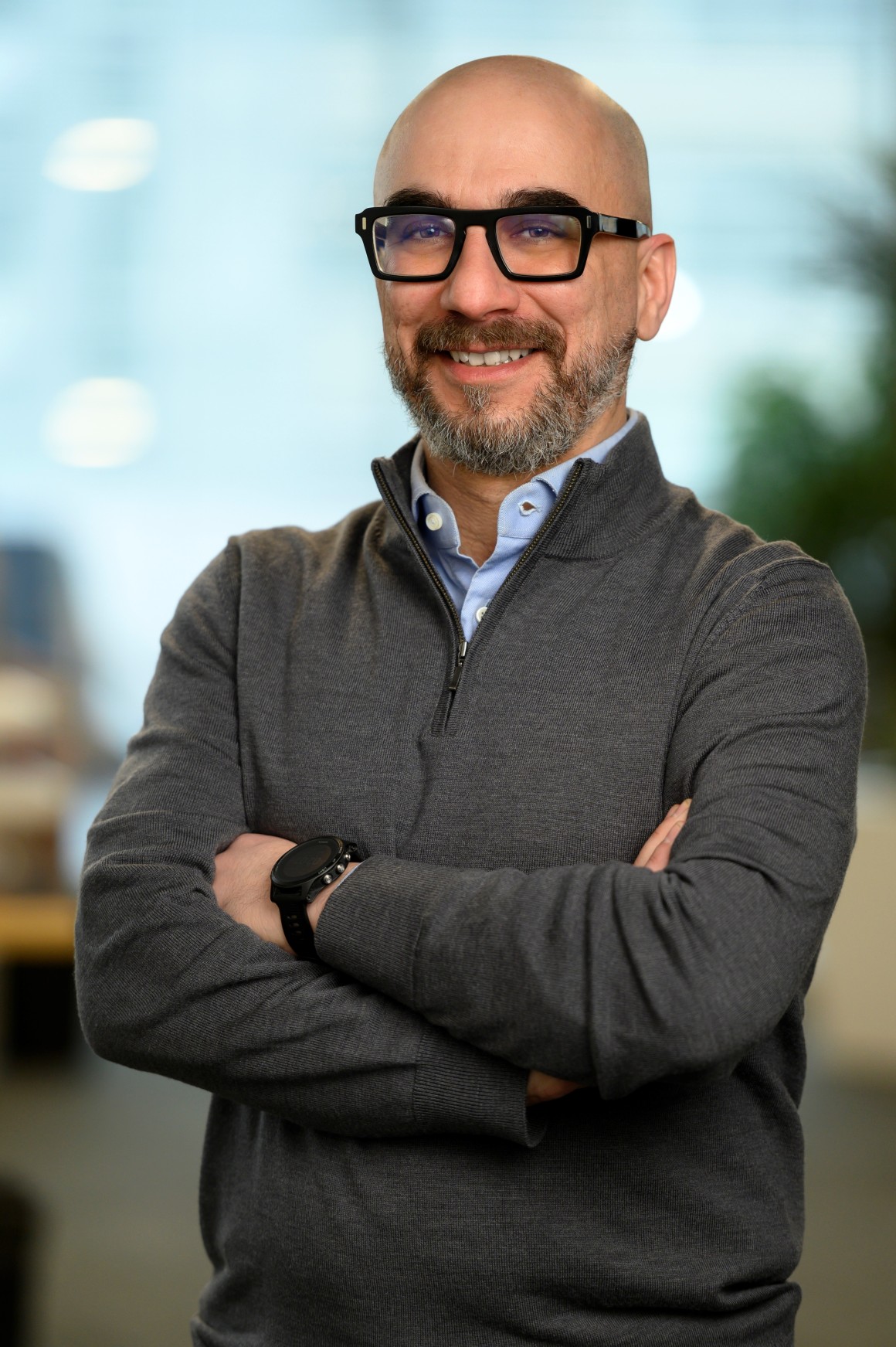
Alessandro Oltramari
Bosch Research, Pittsburgh
Carnegie Bosch Institute at Carnegie Mellon University
Alessandro Oltramari leads work on cyber-physical AI and reasoning at Bosch Research, at the joint between knowledge and learning: how formal knowledge systems can be combined with statistical models to produce AI explainable and safe enough to deploy in the physical world. He was part of the team that built DOLCE, still one of the most widely used foundational ontologies, and has carried that grounding into the current era, combining knowledge graphs, commonsense reasoning and large language models, including work that couples cognitive architectures with LLMs for industrial decision-making. He serves on the editorial board of the Neurosymbolic Artificial Intelligence journal, and brings the industrial perspective on what neurosymbolic systems have to survive once they leave the lab.
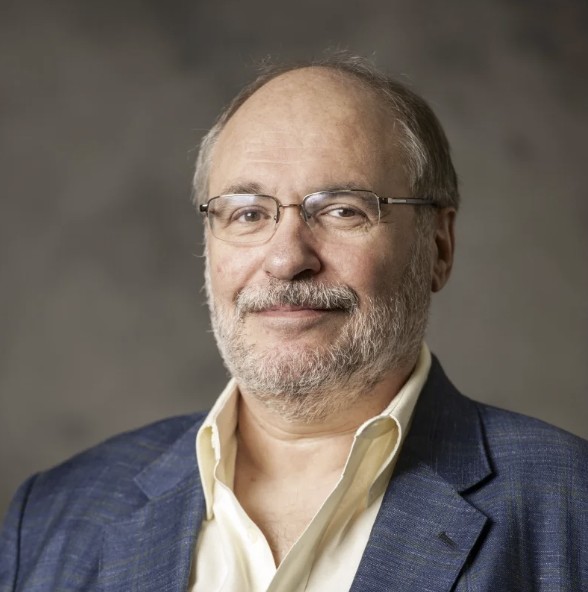
Sergei Nirenburg
Rensselaer Polytechnic Institute
Language, Embodiment, Intelligence, Agency Lab
Sergei Nirenburg co-directs RPI's LEIA Lab, which develops language-endowed intelligent agents whose knowledge-based semantics let them not only act but account for their own reasoning, with explainability treated as the precondition for trust rather than a post-hoc gloss. His current work centres on the OntoAgent cognitive architecture, applied across clinical medicine, cognitive robotics, forensics and descriptive linguistics, and he is the principal developer of HARMONIC, the lab's cognitive robotic architecture. He is also a co-founder of OntoAgent, a new startup. His books include Ontological Semantics, Linguistics for the Age of AI, and Agents in the Long Game of AI: Computational Cognitive Modeling for Trustworthy, Hybrid AI, which argues the case for deep, knowledge-based agents in an era dominated by scale.
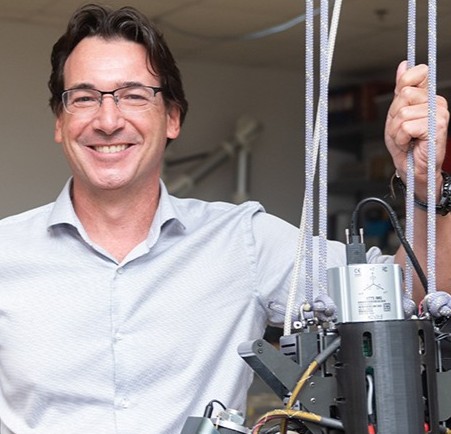
Luis Sentis
The University of Texas at Austin
Human Centered Robotics Laboratory
Luis Sentis directs the Human Centered Robotics Laboratory at UT Austin. The whole-body control framework he developed with Oussama Khatib remains a standard for coordinating contact, balance and manipulation in high-degree-of-freedom robots, and his lab has built and studied a long line of platforms including Dreamer, the point-foot biped Hume, and the Mercury and DRACO series, as well as leading UT Austin's contribution to the DARPA Robotics Challenge with NASA's Valkyrie humanoid. Current work spans dynamic locomotion in confined spaces, embodiment-aware skill learning across robot morphologies, exoskeletons, and safety guarantees for robots operating among people. He is a founding member and advisor of Apptronik, the humanoid company spun out of his lab's NASA-sponsored work.